
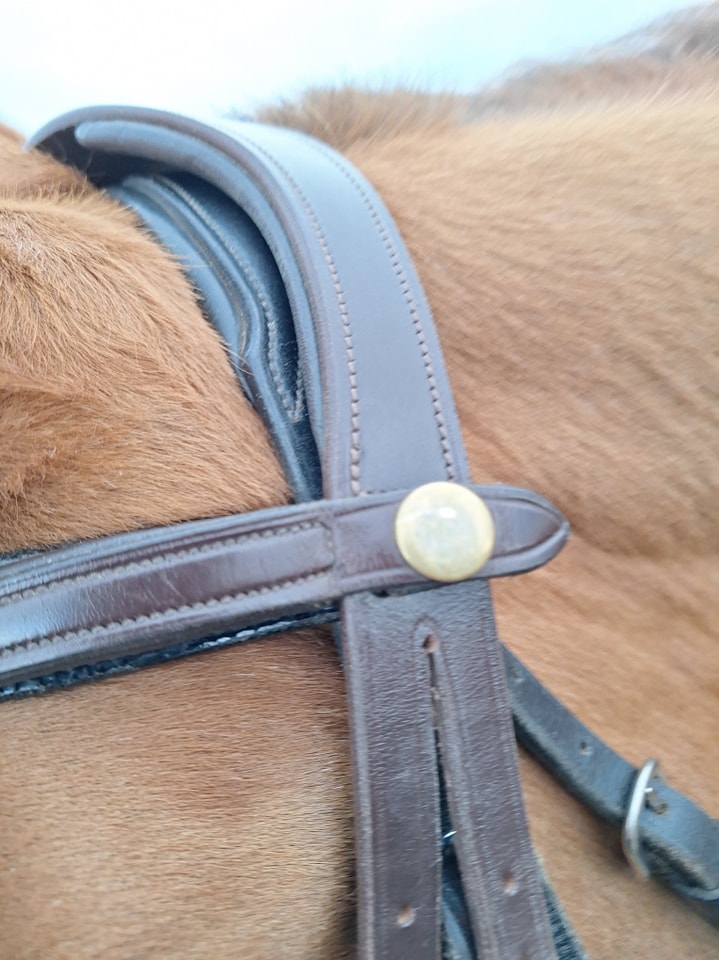
A bridle is far more than a piece of tack that holds the bit in place. Every part of the bridle touches a delicate area of the horse’s head, and poor fit can create unnecessary tension, pressure, and behavioural issues.
1. Common Bridle Fit Problems
Most riders unknowingly use bridles that are:
Too tight across the poll
Incorrect browband length (leading to compression)
Nosebands fitted in the wrong position
Cheekpieces that destabilise the bit
Headpieces that press on sensitive nerves
These issues often show up in behaviour long before the rider spots the problem.
2. How Poor Fit Shows Up in Your Horse
Typical signs include:
Ear flicking or ear sensitivity
Avoiding the bridle when being tacked up
Opening the mouth or crossing the jaw
Tension in the poll or neck
Uneven rein contact
Difficulty flexing or bending
A correctly fitted bridle relieves pressure and allows your horse to focus on the work without discomfort.
3. What a Professional Bridle Fitting Involves
During a consultation:
Each part of the bridle is assessed for size and symmetry
Adjustments are made to relieve pressure points
Noseband position and tightness are checked
Headpiece fit is corrected to avoid nerve compression
Alternative styles are recommended if needed
The difference in your horse’s comfort is often immediate.
4. Small Adjustments Create Big Results
A properly fitted bridle promotes:
A softer, more stable contact
Better willingness to work
More confidence in transitions and bending
Improved comfort and relaxation
Your horse can’t tell you when something’s uncomfortable—bridle fitting helps you listen.

Author
Ruth Fisher
Ruth Fisher